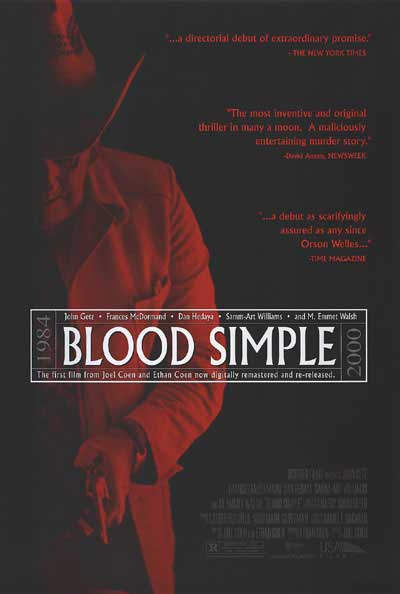
Grade: A (***** out of *****)
The Coen brothers’ first film, the Gothic noir thriller, Blood Simple, which premiered at the 1985 Sundance Film Fest, remains one of the 1980s’ most stunning debuts, marked by sprightly black humor, mordant wit, and visual cleverness.
Joel Coen wrote the script with younger brother, Ethan Coen, and together they produced the film for a little over $1 million.
The movie interjects visual shrewdness and playful moodiness that compensate for a rather familiar plot of a cuckolded husband (Dan Hedaya), who hires a seedy private eye (M. Emmet Walsh) to kill his wife (Frances McDormand) and her lover (John Getz).
Occasionally, the Coens, like other first-time directors, abandon discipline and thematic coherence and let stylishness–and striking set pieces–overwhelm the narrative, a problem that would recur in their work.
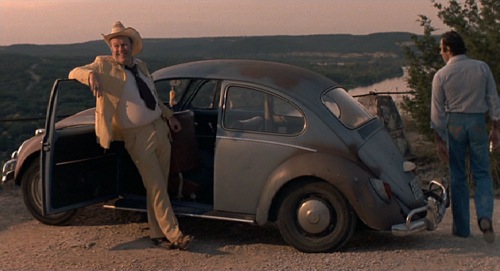
The Coens are masters of props, and their angling on graphic details transform this variation on the love triangle into a bizarre nightmare.
A thriller with noirish fatalism and grand style, Blood Simple lacks strong characterization or compelling plot. All the protagonists are cardboard creations, manipulated as the other props, but the film demonstrated a strong authorial vision, with showy aestheticism that makes the story bleaker, colder, and more stylized than it must have been on paper.
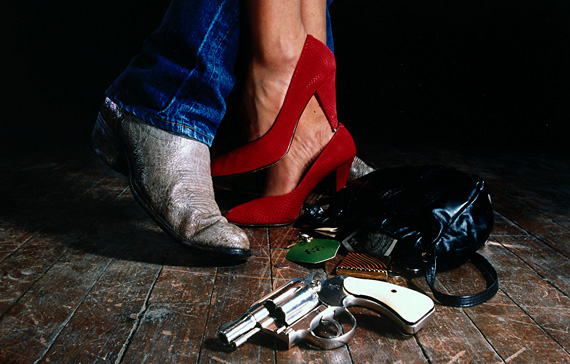
The Coens concocted a plot rich in surprise and coincidence–with roots in the crime stories of such American masters as James M. Cain, Elmore Leonard and Jim Thompson. in fact, the film’s title is inspired by Dashiell Hammett’s’ 1929 novel, Red Harvest, in which “blood simple” describes the mindset of individuals people after a prolonged involvement in violence.
The premise is unremarkable–the reduced core of hard-boiled novels–but the film, as David Denby suggested, offers an ironic sense of destiny: Life is smarter and more treacherous than we are, and ultimately, nothing turns out the way we had planned or wanted it to be.
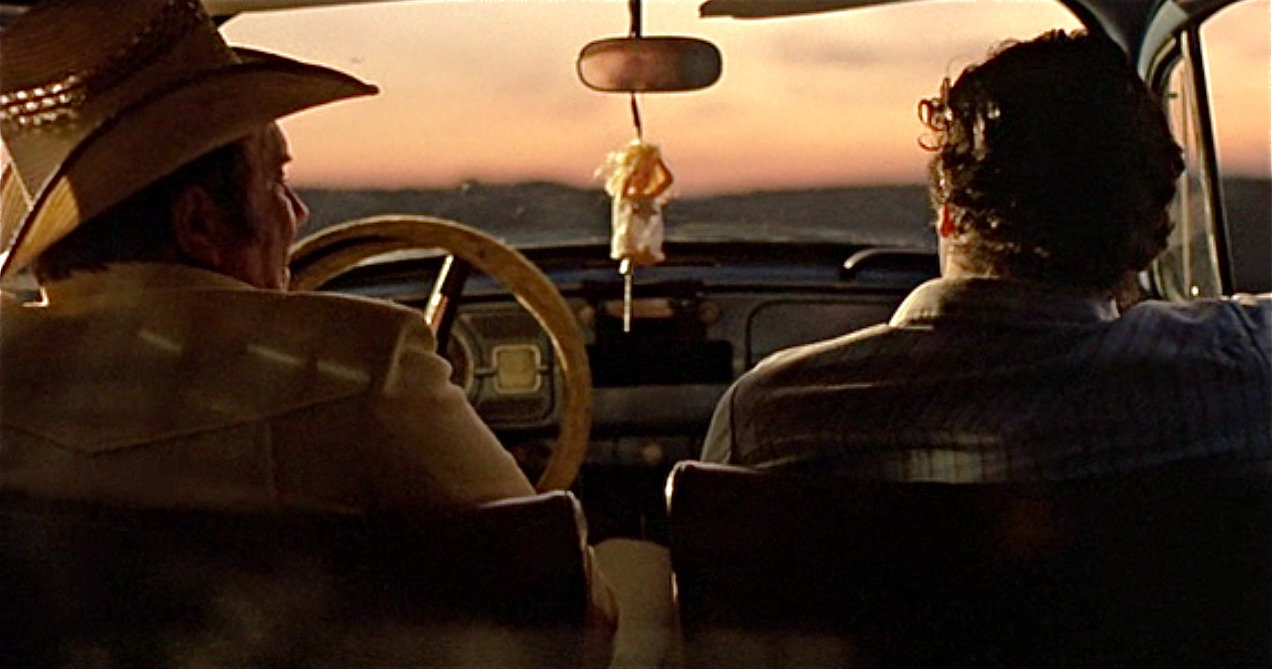 From the opening shot of a rain-spattered windshield through a tense, artfully composed finale, Blood Simple is soaked with suspense that continues to mount.
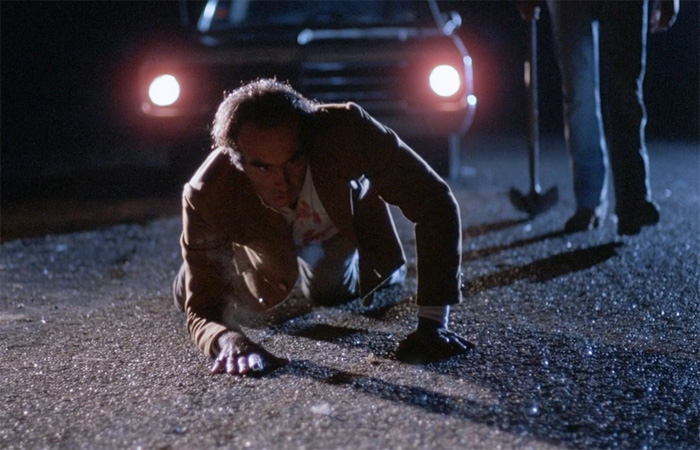
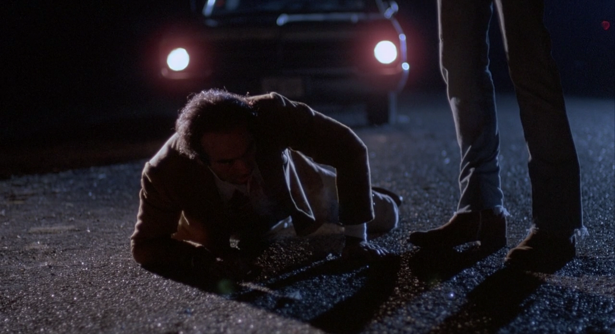
Barry Sonnenfeld’s dazzling camera, which consciously distorts space, becomes an active participant in the game, lending the film’s last scene, in which the wife and detective fight for their very lives, bizarre humor.
Throughout, there are plenty of fancy moves, as when the camera slowly glides along a bar, then lifts up over a napping drunk.
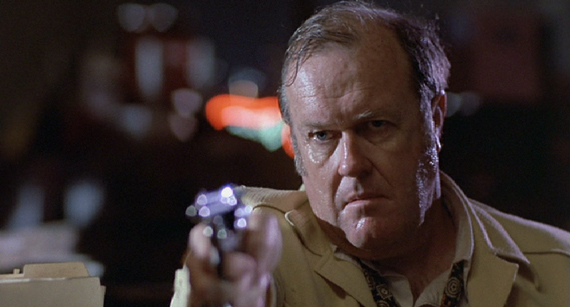
Blood Simple introduced the Coens’ wry, sardonic treatment of violence. Stylized, the cartoon-like violence was choreographed to produce visual rather than emotional effect, aiming to both scare and stun the viewers with gory pulp elements.
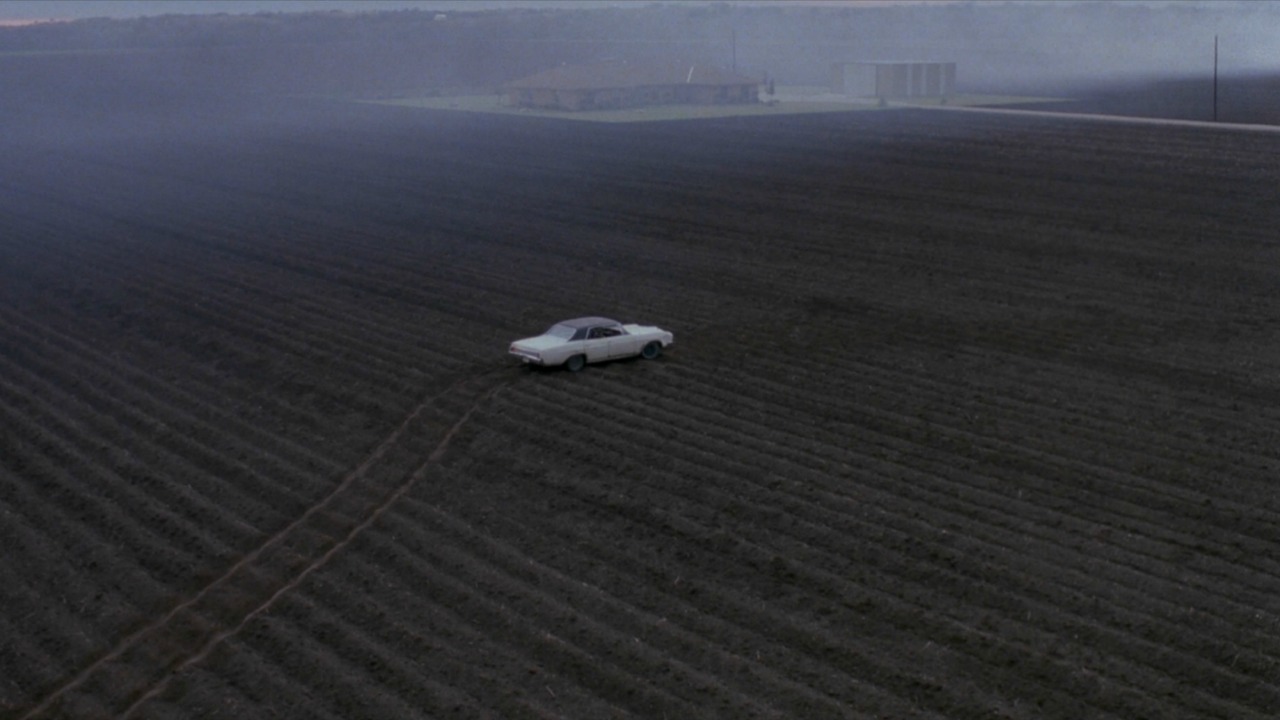
In the film’s most talked-about scene, the husband’s corpse is buried alive by the lover. In the next scene, a memorable long take shows the lover’s car totally isolated in Texas’ vast, flat fields.
Nonetheless, some criticism of classic noir was implied in the film. Frances McDormand, who later married Joel and went on to star in several of their films, turning in an Oscar-winning performance in the 1996 Fargo, was an ordinary-looking actress cast as femme fatale, a type traditionally played by glamorous stars. Though the film is not intended as an overtly feminist text, McDormand’s Abby is brighter than all of the men around her, and unsurprisingly, she is the only one to survive the deadly ordeal.

Holly Hunter (uncredited), who provides the voice of Helene Trend, would star in the Coens’ next movie, the wild comedy, Raising Arizona.
The impressive score, a mixture of solo piano and electronic ambient sounds, represents the first collaboration of Carter Berwell with the Coens, which will continue in future films.
Remake
In 2009, the acclaimed Chinese director Zhang Yimou released a loose remake of the film, a comedy titled A Simple Noodle Story (aka A Woman, a Gun and a Noodle Shop), set in a Chinese noodle shop, and centering on the restaurant owner’s plan to murder his adulterous wife and her lover.
Cast
Ray (John Getz)
Abby Marty (Frances McDormand)
Julian Marty (Dan Hedaya)
Private detective Loren Visser (M. Emmet Walsh)
Meurice (Samm-Art Williams)
Debra (Deborah Newmann)
Landlady (Raquel Gavia)
Radio Evangelist (William Preston Robertson)
Credits
Produced by Ethan Coen
Exec-producer: Daniel F. Bacaner
Associate producer: Mark Silverman
Directed by Joel Coen
Screenplay: Joel and Ethan Coen
Camera: Barry Sonnenfeld
Music: Carter Burwell
Production design: Jane Musky
Editing: Roderick Jaynes and Don Wiegman
Casting: Julie Hughes and Barry Moss
Running time: 97 Minutes