Only four of the 90 Oscar-winning films have been Westerns: “Cimarron” in 19301, Kevin Costner’s “Dances With Wolves” in 1990, Clint Eastwood’s “Unforgiven,” in 1992, and Joel and Ethan Coen’s “No Country for Old Men” in 2007.
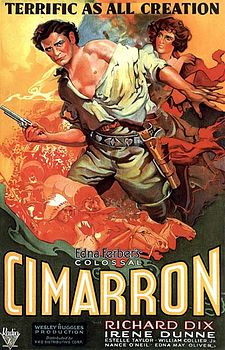
The Western is not a genre that has impressed Academy voters–unless it’s something of the caliber of Stagecoach (1939), directed by John Ford.
Directed by Wesley Ruggles, “Cimarron” is based on Edna Ferber’s best-selling book about the opening of the Oklahoma frontier, from the late 1890s to 1940.
Facing hard financial times, RKO took a gamble with “Cimarron,” which covers four decades in the Cravat family and recreates the Oklahoma land rush circa 1888. Aiming for the epic and visual sweep of silent films, “Cimarron” made movie stars out of its two leads: Richard Dix, a handsome silent hero, and Irene Dunne, who began her career on Broadway in “Show Boat.”
Richard Dix was well cast as the chivalrous adventurer, Yancey Cravat, the dashing, gallant, incorrigible romantic who must always be moving on, amazed to find out that he actually had lived in one place for five years A vagrant romantic with passion was for new and open spaces, Yancey always disappeared toward new horizons, an idealistic fighter for unpopular causes, courageous editor, shrewd lawyer, faithful lover of his wife. A unique character, Yancey is periodically attacked with wanderlust, nonchalance, and impulsiveness.
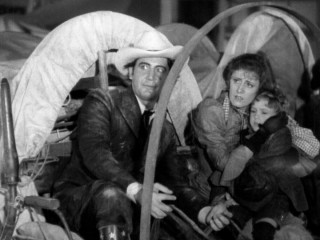 Referring to the Oklahoma Land Rush, Cravat states: “Creation. That took six days. This was done in one. History made in an hour. Why, it’s like a miracle out of the Old Testament.”
Religion is evoked again, when Cravat talks about the new newspaper: “”The Oklahoma Wigham prints all the news all the time, knowing no law except the law of God and the government of the United States.”
Irene Dunne plays the indomitable Sabra Cravat, Yancey’s sterling wife, who sticks to the newspaper, the Oklahoma Wigwam that he had started. Sabra starts as a fragile wife, but after being deserted by Yancey, she learns to carry on valiantly, editing the local paper in his place and becoming a congresswoman. It’s Sabra who enlists our sympathy, particularly after Yancey deserts the family and goes to the Cherokee Strip. When he returns, five years later, Yancey asks his wife if she had missed him!
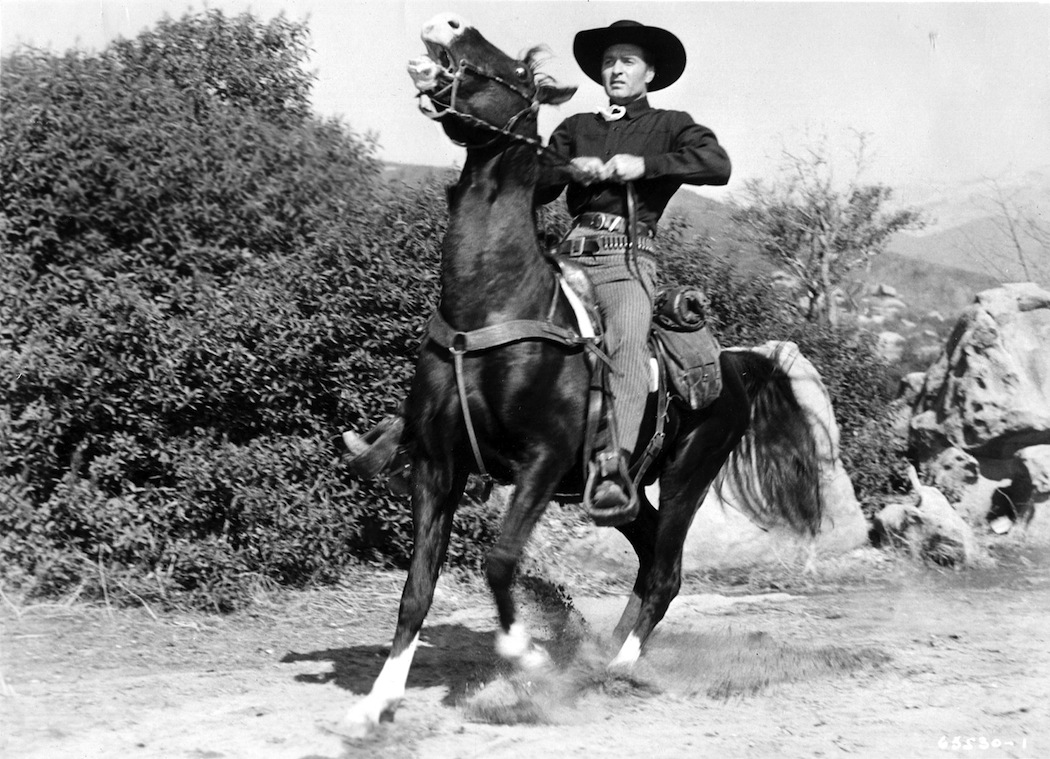 That Cravat is a mythical, not entirely understood, figure, is expressed by Sol Levy (George E. Stone), talking to Sabra, who has not heard from her husband in five years. He says: “They will always talk about Yancey. He’s going to be part of the history of the great Southwest. It’s men like him that build the world. The rest of them, like me, we just come along and live in it.”
There are changes in character and scenery as the community grows into a hustling modern town. The Cravats’ level of tolerance is tested, when their son Crim becomes enamored of an Indian girl and marries her. Yancey’s editorial is in favor of the Indians, and though frowned upon at first by his wife, it’s eventually reprinted on every anniversary of its appearance.
Oscar Context
Cimarron won three Oscars, Best Picture, Writing Adaptation (Howard Estabrook) and Interior Decoration (Max Ree), and received nominations for actors Dix and Dunne, director Ruggles, and cinematographer Edward Cronjager.
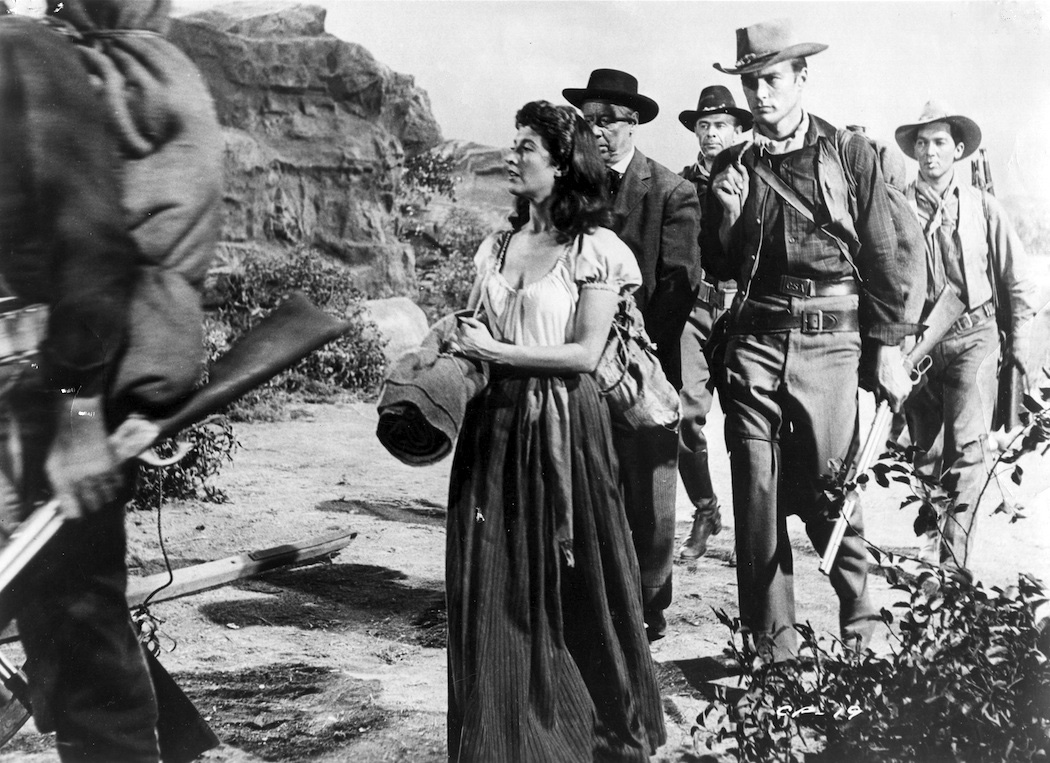 Norman Taurog won the Best Director Oscar for “Skippy”; Lionel Barrymore the Actor Oscar for “A Free Soul”; Marie Dressler the Best Actress Oscar for “Min and Bill”; Floyd Crosby the Cinematography Oscar for “Tabu.”
RKO Radio Pictures invested more than $1.5 million into their epic production. Filming began in the summer of 1930 at Jasmin Quinn Ranch outside of Los Angeles, where the land rush scenes were shot. Numerous cameramen, extras, wagons, were used by the studio, which purchased 89 acres in Encino, where construction of Art Director Max Ree’s Oscar winning design of a western town was built to represent the Oklahoma fictional boomtown of Osage. These sets in Encino were used for other RKO films, as well as other features, such as It’s a Wonderful Life (1946).
RKO premiered their epic picture at the RKO Palace Theatre in New York on January 26, 1931, and then on February 6 of that year at the Los Angeles Orpheum Theater. The premiere included personal appearances of Richard Dix and Irene Dunne, a stage show and an orchestra.
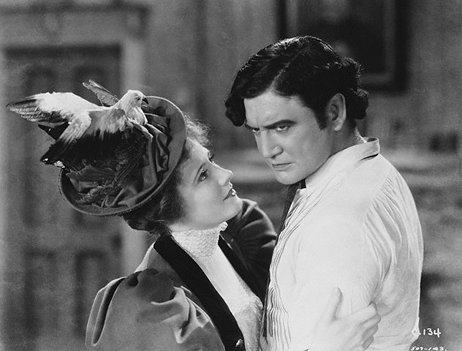
Commercial Appeal:
While it was a commercial success, initially, due to the Depression, RKO did not recoup their investment in the film, which lost over half a million dollars. However, it earned more money on later re-releases.
The movie continued to remain RKO’s most expensive film until the 1939 adventure Gunga Din.
Cast
Richard Dix as Yancey Cravat
Irene Dunne as Sabra Cravat
Estelle Taylor as Dixie Lee
Nance O’Neil as Felice Venable
William Collier Jr. as The Kid
Roscoe Ates as Jesse Rickey
George E. Stone as Sol Levy
Stanley Fields as Lon Yountis
Robert McWade as Louis Hefner
Edna May Oliver as Mrs. Tracy Wyatt
Judith Barrett as Donna Cravat