As directed by craftsman Charles Vidor, Cover Girl is an enjoyable, lavishly produced Technicolor musical, which catapulted Rita Hayworth to the status of Columbia’s resident queen and national stardom.
Grade: B
| Cover Girl | |
|---|---|

Theatrical release poster
|
|
The melodic score, by experts Jerome Kern, Ira Gershwin, and Yip Harburg, well performed by the stars, Rita Hayworth and Gene Kelly, made “Cover Girl” a popular, Oscar-nominated movie.
Flaunting sexy wardrobe and red hair to match, the gorgeous-looking Hayworth plays Rusty Parker, a chorus girl given a chance for stardom by a wealthy magazine editor (Otto Kruger), who years earlier had been in love with the girl’s mother.
Offered an opportunity to be a popular cover girl, she would faithfully remain with her tacky nightclub act if only the club manager Danny McGuire (Gene Kelly), whom she likes, would ask her. He loves her too, but doesn’t want to stand in her way, so he fakes an argument.
Phil Silvers as best friend, and Eve Arden s Kruger’s acid-tongued assistant, provide the usual comic relief.
There are many good musical numbers, including “Long Ago and Far Away” and Kelly’s famous “Alter-ego” dance.
Kelly co-choreographed with Stanley Donen, and both artists would go back to MGM after this picture, where the would evolve (singly and jointly) into first-rank artists.
Released during WWII, the movie was extremely popular at the box-office.
Cover Girl is the film that skyrocketed both Rita Hayworth and Gene Kelly (who made his debut two years earlier) to superstardom.
Vidor was Columbia’s leading director, though he had never achieved the level of artistry and control that other filmmakers (Cukor, Minnelli) of his generation had. Following an endless string of disptes with Columbia’s notorious honcho, Harry Cohn, Vidor moved to other studios.
His output is uneven, and today he is best remembered for directing the 1946 noir melodrama, Gilda, one of Hollywood’s first S&M movies, replete with queer overtones (unintentionally, of course). It is Hayworth’s most iconic role. (See our essays about “Gilda”).
My Oscar Book:
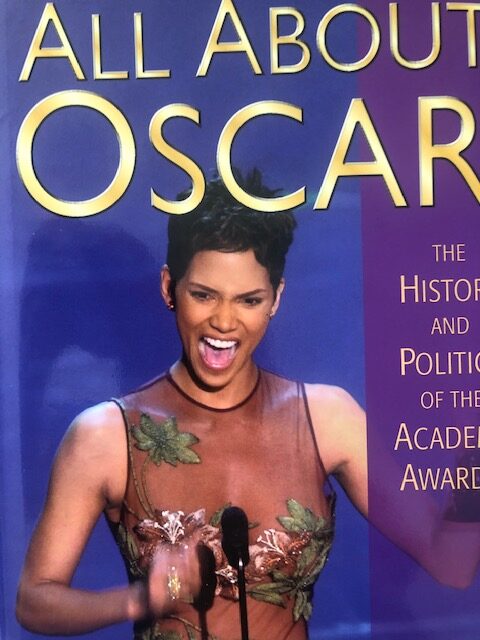
Oscar Nominations: 5
Scoring (Musical): Carmen Dragon and Morris Stoloff
Cinematography (Color): Rudolph Mate and Allen M. Davey
Interior Decoration (Color): Lionel Banks and Cary Odell; Fay Babcock.
Sound Recording: John Livadary
Song: Long Ago and Far Away, music by Jerome Kern, lyrics by Ira Gershwin
Oscar Awards: 1
Scoring
Credits
Produced byArthur Schwartz
Directed by Charles Vidor
Screenplay: Virginia Van Upp, Marion Parsonnet, Paul Gangelin.
Screenplay by Virginia Van Upp; Adaptation by Marion Parsonnet, Paul Gangelin; Story by Erwin Gelsey
Cinematography: Rudolph Maté, Allen M. Davey
Edited by Viola Lawrence
Production and distribution: Columbia Pictures
Release dates: March 20, 1944 (Providence, Rhode Island); April 6 (US)
Running tim: 107 minutes
DVD: August 19, 2003