Unfortunately, after Cabin in the Sky, which was a big success, Vincente Minnelli was assigned to direct a trivial comic romp, I Dood It, starring Red Skelton and Eleanor Powell.
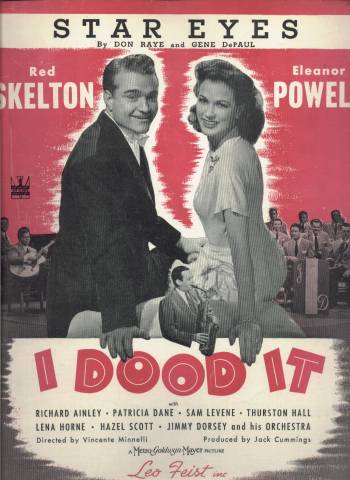
Shooting began in November 1942, just three weeks after completing his first film.
The story is ultra simple and slender, centering on a clumsy tailor’s assistant named Joseph Rivington Renolds (Skelton), who adores a Broadway star (Powell), attending each and every performance of her Civil War melodrama. To annoy her lover, Roy Hartwood (John Hodiak), who has taken with another woman, the star then impulsively weds her fan. The marriage is based on misunderstanding: She thinks he’s a rich mining tycoon,
Note
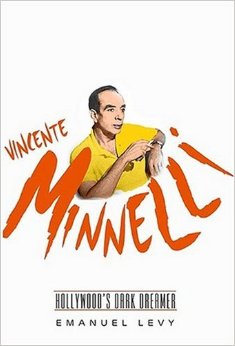
If you want to know more about Minnelli’s career and life, please read my book:
The studio was stuck with bad footage shot earlier by director Roy de Ruth, including two musical numbers: an Eleanor Powell production number on a battleship and an exercise in twirling ropes. The studio execs pretended as if it was up to Minnelli to decide whether or not to use the existing materials, but in truth, he had to.
At first, Minnelli was flattered that they turned to him for help, only to realize later that he had no choice. He knew that it wasn’t a politically smart for a novice to refuse his second job at a studio like MGM. To save money, Minnelli was instructed to keep some of the old footage. Metro then asked Sid Herzog and Fred Saidy to rewrite the slipshod script, inspired by Buster Keaton’s last silent film, “Spite Marriage,” in 1929.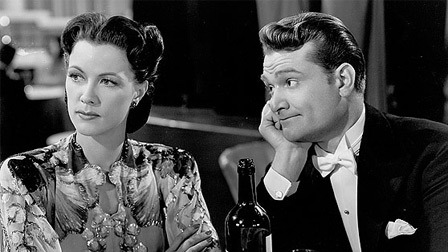
In updating the narrative, the writers have made the Skelton character expose Hodiak as a spy; saboteur plots were popular during the War years.
For Minneli, it was another learning experience: The film offered Minnelli a look at the comedian’s real psyche and working methods . Skelton had to deliver one-liners but he was unsure of how funny they were and what style to use for his delivery. “I’m not funny,” Skelton complained to his wife and manager, Edna, as they looked at the daily rushes. “You’re crazy,” Edna said, “You have never been funnier.” But Skelton continued to agonize, because he knew deep down that his instincts were right about the material
“I Dood It” features only pale traces of the famous Keaton picture. There’s a long slapstick routine in which Skelton carries the coma-ridden bride to bed on their wedding night–Powell had mistakenly taken the drink she’d concocted to knock him out. The films slender humor was based on the collision between Powell’s self-centered callousness and Skelton’s masochism. His suicide attempt fails because the gas has been turned off.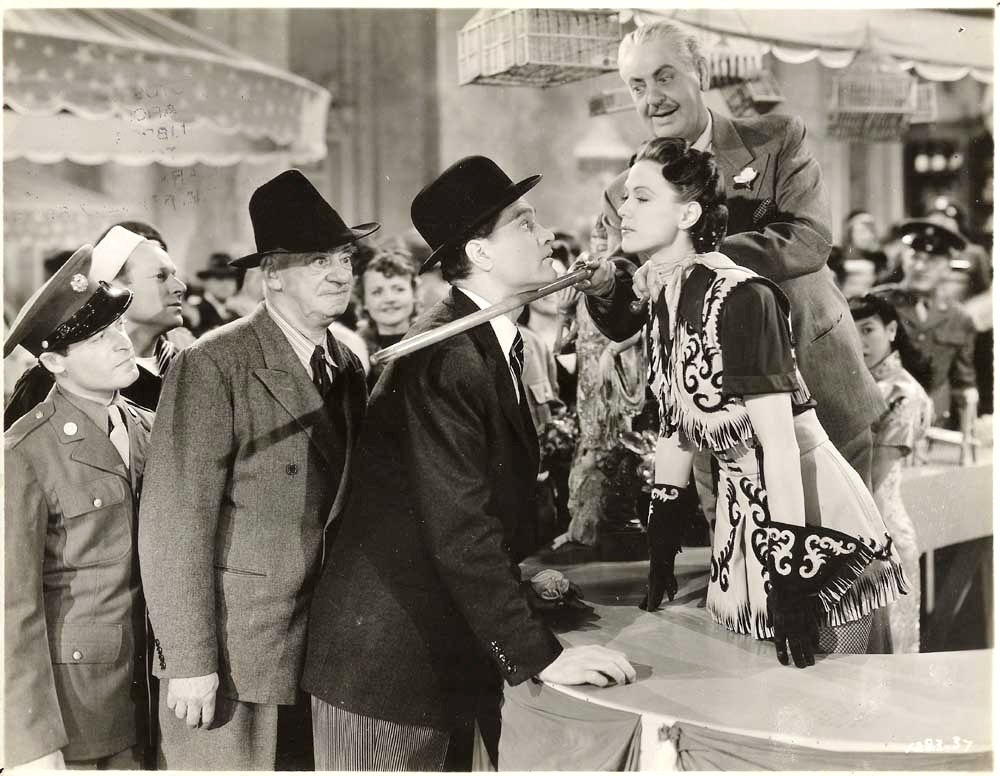
Though he had previously worked with Powell on At Home Abroad, Minnelli never liked her dancing much, which was too athletic for his taste. Moreover, Powell proved an uninspiring foil for Skelton, and her tap dancing was neither exciting nor elegant. Some of her solos were borrowed from previous movies, like a hula dance from Honolulu. Others, like the cowgirl song, “So Long, Sarah Jane,” was shot specifically for this movie.
Even visually “I Dood It” is mediocre. Minnelli’s spark shows just once or twice, in the Penthouse-in-the-Sky routine. Framed as a producer’s audition for Powell’s new show, and easily excisable to placate Southern exhibitors, uncomfortable to say the least about the black performers, it’s shaped as a battle between two divas, Hazel Scott and Lena Horne.
Horne and Scot’s rendition of “Jericho” is too consciously staged. Scott launches into “Taking a Chance on Love,” as a mock concerto turned boogie-woogie, while Minnelli’s camera circles 180-dregree arcs around her baby grand. Then, against a starry cyclorama, a white-gowned Horne sweeps in “I’m terribly sorry, I just couldn’t find a taxi,” a line that prompted mirth. A Cafe Society version of the fall of Jericho follows, as a genteel Horne and her chorus belt out the Kay Thompson arrangement. This was the one vibrant note in an otherwise dull movie. Another mild sequence is the one in which Skelton dons a beard to play a Yankee scoundrel in a Civil War drama, opposite his wife.
Jimmy Dorsey and his Orchestra provide the musical interludes.
Casting Notes:
Skelton and Powell had previously worked together in the 1942 movie, Ship Ahoy, in which they appeared with Jimmy Dorsey’s brother. Tommy Dorsey.
This was Powell’s final starring role at MGM, after which she would make a cameo appearance in “Thousands Cheer, and play the lead role in “Sensations of 1945” (made at United Artists). In 1950, she returned to MGM for a cameo in “Duchess of Idaho,” before retiring from the screen.
Some of the supporting players would go on to bigger and better projects. Hodiak, who would become a major star, plays the small role–and a villain–in this production, just his third movie role.
“I Dood It” was released, Minnelli received a letter from an outraged fan who hated the scene where Skelton, confused about his predicament, is sitting on a park bench next to Butterfly McQueen (who played Powell’s maid) and her black dog (played by Minnelli’s own pet poodle Baba. In a mildly amusing bit, a bewildered Skelton first talks to Butterfly, then to the dog. “How dare you make fun of black people by equating them to dogs” the angry fan wrote. Minnelli was shocked by the misinterpretation; it was the last reaction he anticipated.
The N.Y. Times critic, Bosley Crowther, faulted the story for sagging about half-way along, claiming that, “too much responsibility has been piled upon Red Skelton in what was basically a one-man comedy. Ballasted with stone, the film contained few flashes of Powell’s dancing skills or Skelton’s comedy antics. A movie slapped with an unappetizing title, the critic felt that, for grammar like that, maybe he’s got what he deserves.”
Minnelli did his best to please producer Jack Cummings, but in the end, he himself was disappointed with the results. He would always refer to this picture as “my sophomore jinx.”
However, despite mixed to negative reviews, I Dood It was successful at the box-office, generating a profit of about $1 million (against a budget of $1.135 million).
After the triumph of his next picture, the lavish musical Meet Me in St. Louis, starring Judy Garland, Minnelli would never again work on such silly and banal material.
Credits:
Produced by Jack Cummings.
Screenplay: Sig Herzig and Fred Saidy, adapted from the film “Spite Marriage”
Cinematography: Ray June.
Art Direction: Cedric Gibbons; Jack Martin Smith.
Set Decoration: Edwin B. Willis; Helen Conway
Songs by Don Raye, Gene de Paul, Lew Brown, Ralph Freed, Sammy Fain, Count Basie, Cole Porter.
Editing: Harold F. Kress.
Costumes: Irene and Irene Sharaff, Gile Steele (only for men)
Choreography: Bob Connolly.
Recording engineer: Douglas Shearer.
Running Time: 101 Minutes.
Cast
Joseph Rivington Renolds (Red Skelton)
Constance Shaw (Eleanor Powell)
Larry West (Richard Ainsley)
Suretta Brenton (Patricia Dane)
Ed Jackson (Sam Levene)
Kenneth Lawlor (Thurston Hall)
Lena Horne (Lena Horne)
Hazel Scott (Hazel Scott)
Roy Hartwood (John Hodiak)
Annette (Butterfly McQueen)
Mrs. Spelvin (Marjorie Gateson)
Mr. Spelvin (Andrew Tombes)