Modestly directed by Gilbert Cates, and based on the play by Robert Anderson, I Never Sang for My Fathe, widely considered to be quasi-autobiographical, is a two-generational family melodrama, well acted by Melvyn Douglas and Gene Hackman (both Oscar nominated).
Grade: B- (** 1/2* out of *****)
| I Never Sang for My Father | |
|---|---|

film poster
|
|
A tense relationship prevailed between the aged Tom Garrison (Melvyn Douglas) and his mature son Gene (Gene Hackman). A college professor who feels that he has never been fully accepted and truly respected by his self-made father, Gene decides to move out of New York and to marry a
California divorcee.
Gene’s mother (Dorothy Stickney) approves of the union, but she is concerned that Gene’s move will have a negative effect on Tom. Indeed, when his mother dies, just before the wedding, Gene is forced to help his father through his last, dark days.
Gene’s sister, Alice (the always superb Estelle Parsons) urges her brother to break the ties—for his own good–or else he’ll wind up as bitter and withdrawn as their father. Gene realizes the biting wisdom of these words when he tries to reach out to his father during a vulnerable moment, only to have the crabby Tom humiliate and reject him.
The tone of the feature, which still feels like a play, is bitter and downbeat, but the text is well written by Anderson (better known for the controversial 1950s play and movie, “Tea and Sympathy,” directed by Minnelli, which deal with homosexuality in a boarding school).
The climactic scene–a vocal confrontation betwee father and son–very much recalls the ending of Richard Brooks screen version of Tennessee Williams Cat in a Hot Tin Roof, when Burl Ives and Paul Newman, as absent father and neglectfully resentful son, air their grievances in the open, but without the cathrtic resolution of that 1958 movie.
In what could be described as “Hollywoiod kitchen-sink realism, the characters are too flat and conventional–what you see is what you get; the film lacks deep psychologocal insights, or more nuanced emotional subtex. That said, the entire ensemble, not just Douglas and Hackman, is superb.
In the following year, Hackman would become a major player and bona fide star, after winning the Best Actor Oscar for William Friedkin’s superb 1971 thriller, The French Connection, which also won Best Picture.
Gilbert Cates was one of the producers of the original stage , which was directed by Alan Schneider and starred Alan Webb, Lillian Gish and Hal Holbrook. Despite the A-list cast, the production was a flop, running for only 124 performances, and losing most of its $195,000 investment.
My Oscar Book:
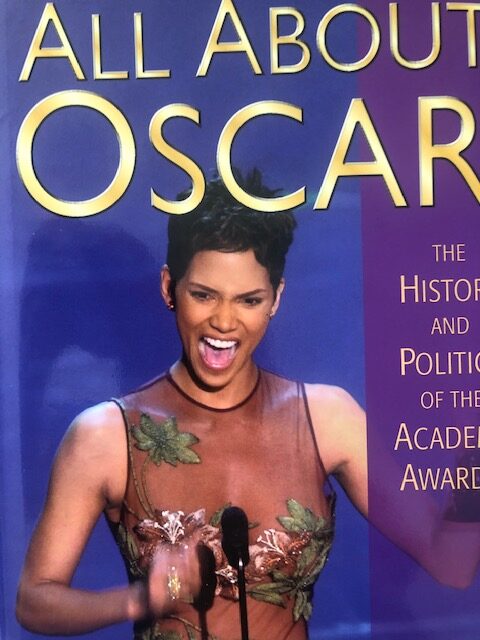
Oscar Nominations: 3
Actor: Melvyn Douglas
Supporting Actor: Gene Hackman
Screenplay (Adapted): Robert Anderson
Oscar Awards: None
Oscar Context:
The winner of the Best Actor was George C. Scott for the biopic “Patton.” British actor John Mills won the Supporting Actor Oscar for David Lean’s “Ryan’s Daughter.”
The Adapted Screenplay went to Ring Lardner, Jr. for Robert Altman’s satire, “M.A.S.H.”
Credits
MPAA Rating: PG.
Directed, produced by Gilbert Cates
Screenplay by Robert Anderson, based his 1968 play, “I Never Sang for My Father
Cinematography Morris Hartzband, George Stoetzel
Edited by Angelo Ross
Music by Al Gorgoni, Barry Mann
Distributed by Columbia Pictures
Release date: October 18, 1970
Running time: 92 minutes
Cast
Melvyn Douglas as Tom Garrison – Father
Gene Hackman as Gene Garrison – Son
Estelle Parsons as Alice – Sister
Dorothy Stickney as Margaret Garrison – Mother
Elizabeth Hubbard as Doctor Margaret ‘Peggy’ Thayer
Lovelady Powell as Norma
Daniel Keyes as Dr. Mayberry
Conrad Bain as Rev. Sam Pell
Jon Richards as Marvin Scott
Nikki Counselman as Waitress
Carol Peterson as Nurse #1
Sloane Shelton as Nurse #2
James Karen as Mr. Tucker (old age home director)
Gene Williams as Dr. Jensen (state hospital director)